
Bimetallic Screw vs. Nitrided Screw: Which Is Better for Abrasive Plastics?
2026.04.10
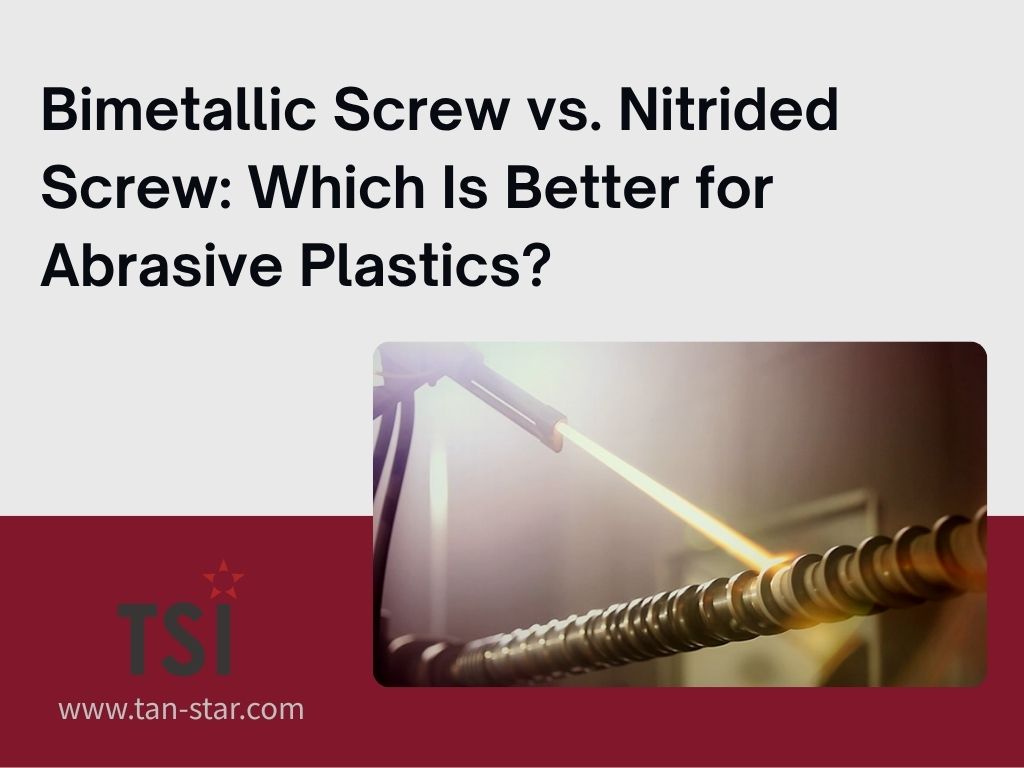
As engineering plastics become more advanced, manufacturers are increasingly processing materials filled with glass fiber, minerals, flame retardants, and recycled additives. While these compounds improve end-product performance, they also create severe wear challenges for plastic processing equipment — especially the screw.
When selecting a screw for abrasive plastic applications, one of the most common questions manufacturers face is whether to choose a bimetallic screw or a nitrided screw. Both options offer enhanced durability compared to untreated steel, but their performance differs significantly depending on the operating environment.
Understanding these differences is critical to choosing the right solution for long-term processing stability and cost efficiency.
What Is a Nitrided Screw?
A nitrided screw is made from alloy steel that has undergone a heat-treatment process called nitriding, which diffuses nitrogen into the surface layer of the metal.
This process improves:
- Surface hardness
- Basic wear resistance
- Initial corrosion resistance
Nitrided screws are widely used in general plastic processing applications because they offer improved durability at a relatively low cost.
However, nitriding only hardens the outer surface layer. Once that layer wears through, the screw becomes vulnerable to rapid degradation.
What Is a Bimetallic Screw?
A bimetallic screw features a wear-resistant alloy layer bonded onto the screw’s working surface, combined with a high-strength steel substrate underneath.
This structure provides:
- Superior wear resistance
- Enhanced corrosion protection
- Stronger durability in high-load applications
- Longer service life in aggressive processing environments
Because the alloy layer is specifically engineered for demanding operating conditions, bimetallic screws are commonly used in advanced plastic processing applications.
Performance Comparison: Bimetallic Screw vs. Nitrided Screw
| Factor | Nitrided Screw | Bimetallic Screw |
|---|---|---|
| Wear Resistance | Moderate | Excellent |
| Corrosion Resistance | Moderate | High |
| Service Life in Abrasive Applications | Limited | Extended |
| Initial Cost | Lower | Higher |
| Long-Term Cost Efficiency | Lower | Higher |
Why Abrasive Plastics Demand More Than Nitriding
Materials that commonly accelerate screw wear include:
- Glass-fiber reinforced plastics
- Mineral-filled compounds
- Flame-retardant engineering plastics
- Recycled plastics containing contaminants
These materials continuously abrade the screw flights during processing. In many cases, the nitrided layer wears away much faster than expected, leading to:
- Reduced conveying efficiency
- Inconsistent melt quality
- Increased black spots or material degradation
- Frequent maintenance downtime
For these applications, a bimetallic screw provides far greater long-term reliability.
When Is a Nitrided Screw Still Suitable?
Despite its limitations, nitrided screws remain a practical choice for:
- Commodity plastics (PP, PE, PS)
- Non-filled materials
- Low-abrasion applications
- Cost-sensitive short-run production
For standard molding operations without harsh processing conditions, nitrided screws may offer sufficient performance.
Why Many Manufacturers Upgrade to Bimetallic Screws
Although bimetallic screws require a higher upfront investment, many manufacturers choose them because they offer:
- Longer replacement intervals
- Reduced machine downtime
- More stable melt performance
- Better dimensional consistency in molded parts
- Lower long-term operating cost
In abrasive plastic applications, the ROI of upgrading to a bimetallic screw is often quickly realized.
TSI’s Expertise in High-Performance Bimetallic Screws
With decades of experience in precision metal processing and barrel/screw manufacturing, Tan Star Industries (TSI) provides high-performance bimetallic screw solutions for demanding plastic processing applications.
TSI’s bimetallic screws are engineered to deliver superior wear resistance, corrosion protection, and processing stability for manufacturers working with abrasive or chemically aggressive materials.
By combining advanced alloy technology, precision machining, and customized engineering support, TSI helps customers select the right screw solution based on material type, processing conditions, and production goals.
FAQ: Common Questions About Bimetallic Screws
1. Is a bimetallic screw always better than a nitrided screw?
Not necessarily. For general-purpose plastics and non-abrasive materials, a nitrided screw may provide sufficient performance. Bimetallic screws are most beneficial in abrasive or corrosive applications.
2. How much longer does a bimetallic screw last?
Service life varies by application, but in abrasive plastic processing, bimetallic screws often last significantly longer than nitrided screws.
3. Can a bimetallic screw improve product quality?
Yes. Because it maintains screw geometry longer, it helps stabilize melt quality, shot consistency, and dimensional repeatability.
4. Is a bimetallic screw worth the higher cost?
For abrasive materials, yes. The extended lifespan and reduced downtime often make it more cost-effective over time.
5. Can TSI customize bimetallic screws for specific materials?
Yes. TSI provides customized screw solutions tailored to resin type, filler content, and processing conditions.
Conclusion — Choosing the Right Screw for Abrasive Plastic Processing
When processing abrasive plastics, selecting the right screw is essential for maintaining productivity, melt quality, and equipment longevity.
While nitrided screws remain suitable for many general-purpose applications, bimetallic screws provide superior protection and long-term value in harsh processing environments.
For manufacturers working with glass-filled, mineral-filled, flame-retardant, or recycled plastics, upgrading to a bimetallic screw is often the smarter investment.
Looking for the right screw solution for your application?
Contact Tan Star Industries (TSI) to explore customized bimetallic screw solutions engineered for demanding plastic processing environments.