
How Shot Peening Creates Beneficial Residual Stress for Longer Component Life?
2026.05.15
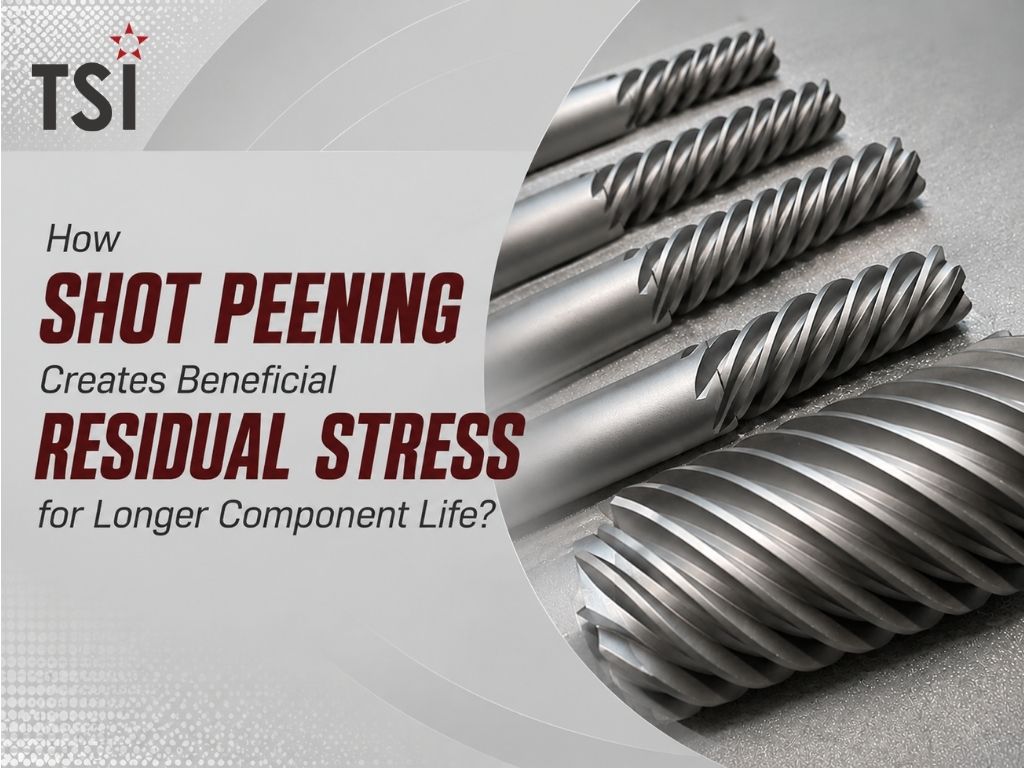
In modern manufacturing, improving component durability is no longer just about using stronger materials. Engineers and manufacturers also rely heavily on advanced surface treatment technologies to enhance fatigue resistance, reduce wear, and extend product lifespan. One of the most effective methods is shot peening, a process widely used in industries such as aerospace, automotive, medical devices, and precision machinery.
At the core of shot peening performance is a critical engineering concept known as residual stress. By intentionally introducing beneficial compressive residual stress into a material’s surface, shot peening helps components resist cracking, fatigue failure, and surface degradation during long-term operation.
Understanding how shot peening influences residual stress is essential for manufacturers seeking higher reliability and longer component service life.
What Is Residual Stress?
Residual stress refers to internal stress that remains inside a material after manufacturing or processing, even when no external force is applied.
Residual stress can be divided into two major types:
-
Tensile residual stress
-
Compressive residual stress
Tensile residual stress is generally undesirable because it can promote crack formation and fatigue failure. In contrast, compressive residual stress helps suppress crack initiation and slows crack propagation, significantly improving component durability.
This is why many surface engineering technologies aim to create compressive residual stress near the material surface.
How Shot Peening Generates Beneficial Residual Stress
Shot peening works by propelling small particles — called shot media — onto a material surface at high velocity. Each impact creates localized plastic deformation on the surface layer.
As the surface deforms, the underlying material attempts to resist this expansion, creating a compressive stress layer near the surface. This beneficial compressive residual stress becomes one of the main reasons shot peening improves fatigue performance.
The process helps:
-
Reduce crack initiation
-
Slow fatigue crack growth
-
Improve wear resistance
-
Increase component lifespan
-
Enhance reliability under cyclic loading
Because fatigue failure usually begins at the material surface, creating compressive residual stress is highly effective in improving long-term durability.
Why Residual Stress Matters in High-Performance Components
Many industrial components operate under repeated mechanical loading, vibration, or thermal cycling. Over time, these stresses can lead to microscopic surface cracks that gradually expand and eventually cause failure.
Examples include:
-
Gears
-
Springs
-
Shafts
-
Bearings
-
Mold components
-
Precision rotating parts
By introducing compressive residual stress through shot peening, manufacturers can significantly reduce the risk of premature fatigue failure.
This is particularly important for components used in:
-
Aerospace systems
-
Automotive drivetrains
-
Industrial automation equipment
-
Medical devices
-
High-speed machinery
The Relationship Between Surface Quality and Residual Stress
Not all shot peening methods create the same residual stress distribution. Surface finish quality and shot size greatly influence the final result.
Conventional shot peening often uses relatively larger shot particles, which may increase surface roughness. While this still improves fatigue resistance, excessive surface deformation can become problematic for precision components.
Advanced processes such as TNP Shot Peening use ultra-fine particles to generate more controlled compressive residual stress while maintaining smoother surface conditions.
This approach offers advantages such as:
-
More uniform residual stress distribution
-
Reduced surface roughness
-
Better dimensional stability
-
Improved precision compatibility
How Residual Stress Improves Fatigue Life
Fatigue failure commonly occurs when cyclic stress repeatedly opens and extends microscopic cracks.
Compressive residual stress acts as a protective barrier by counteracting tensile stress during operation. As a result:
-
Crack formation becomes more difficult
-
Existing cracks propagate more slowly
-
Surface durability improves significantly
In many applications, shot peening can dramatically increase fatigue life compared with untreated components.
This is one reason why shot peening is widely used in safety-critical industries where component reliability is essential.
TSI’s Expertise in Precision Shot Peening Technology
With extensive experience in precision metal processing and surface engineering, Tan Star Industries (TSI) has developed advanced TNP Shot Peening technology to improve the performance and durability of screws and precision metal components.
Unlike conventional shot peening methods, TSI’s TNP Shot Peening process utilizes ultra-fine particles to generate controlled compressive residual stress while maintaining stable surface quality and dimensional accuracy. This helps reduce the risk of crack initiation, improve fatigue resistance, and enhance long-term component reliability under cyclic loading conditions.
According to TSI’s technical analysis, TNP Shot Peening also contributes to:
-
Improved surface hardness
-
Enhanced wear resistance
-
Reduced operational noise
-
Better surface consistency
-
Longer component lifespan
These advantages make TNP Shot Peening particularly suitable for high-performance screws, mechanical components, and precision industrial applications where both durability and processing stability are critical.
By combining precision manufacturing expertise with advanced residual stress control technology, TSI helps manufacturers achieve more reliable performance and extended service life in demanding operating environments.
Applications That Benefit from Shot Peening and Residual Stress Control
Shot peening and residual stress optimization are commonly applied to:
-
Automotive transmission parts
-
Precision mechanical components
-
Aerospace hardware
-
Industrial tooling
-
Rotating machinery
-
Mold and die components
As industries continue demanding lighter, stronger, and longer-lasting components, controlling residual stress through advanced shot peening technologies becomes increasingly important.
FAQ: Common Questions About Residual Stress and Shot Peening
1. What is beneficial residual stress?
Beneficial residual stress usually refers to compressive residual stress introduced into a material surface to improve fatigue resistance and reduce crack formation.
2. Why is compressive residual stress important?
Compressive residual stress helps prevent surface cracks from initiating and propagating, improving durability and extending component lifespan.
3. Does shot peening always improve fatigue life?
In many applications, yes. Properly controlled shot peening significantly improves fatigue resistance by creating beneficial compressive residual stress near the material surface.
4. Can shot peening affect surface finish?
Yes. Conventional shot peening may increase surface roughness. Advanced methods such as TNP Shot Peening help maintain smoother surfaces while still improving residual stress distribution.
5. Which industries commonly use shot peening?
Shot peening is widely used in aerospace, automotive, medical, industrial machinery, and precision manufacturing industries.
Conclusion — Residual Stress as a Key to Longer Component Life
Residual stress plays a critical role in determining component durability and fatigue performance. Through shot peening, manufacturers can intentionally introduce beneficial compressive residual stress that strengthens surfaces and improves long-term reliability.
As industrial components continue operating under increasingly demanding conditions, advanced shot peening technologies become essential for achieving stable performance and extended service life.
Looking to improve fatigue resistance and surface durability in your components?
Contact Tan Star Industries (TSI) to learn how advanced TNP Shot Peening solutions can support your precision manufacturing applications.